
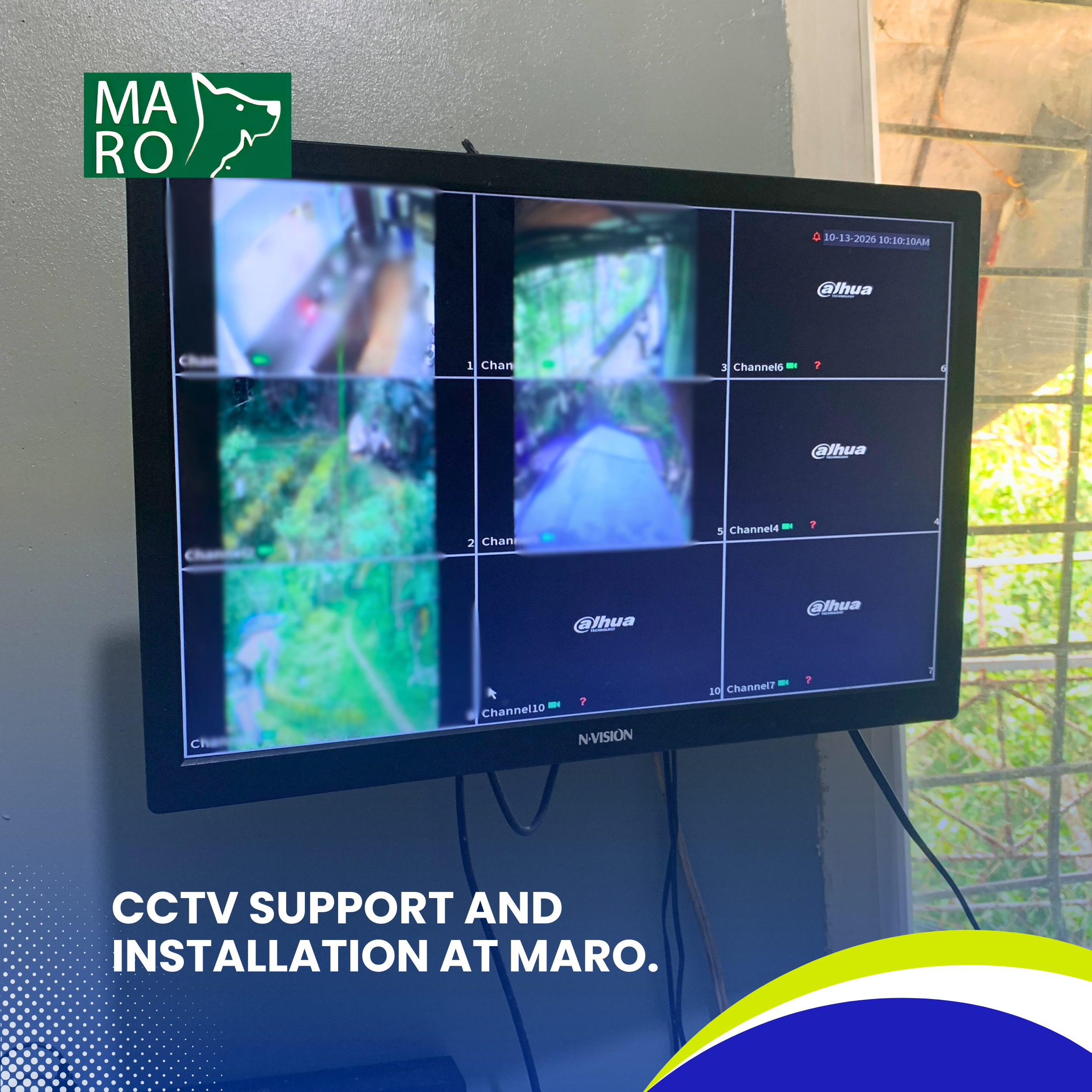
CCTV Support and Installation at MARO. October 14, 2026 Carol Jhane Canitan Video. https://youtube.com/shorts/OOqVK6n4R4s Introduction. Reliable CCTV surveillance plays an important role in maintaining security and monitoring daily activities. For animal rescue …
How Do Security Cameras Work?
Introduction.
When we hear the term CCTV or security camera, many people immediately think of a camera mounted on a wall or ceiling that continuously records video. When an incident happens, the footage is simply played back for review.
But how does a security camera actually work?
A CCTV system involves several components that work together to capture, process, transmit, and store video footage. From the camera lens and image sensor to the DVR or NVR, each component plays an important role in making a surveillance system effective.
The Camera Lens Captures the Scene.
The process starts with the camera lens. The lens captures the image or video of the area being monitored.
When a person, vehicle, or any other movement enters the camera’s field of view, the lens captures the details within that area. This is why proper camera selection and placement are important. The lens type and viewing angle determine how much of the area the camera can see.
A properly positioned camera helps provide better coverage and reduces potential blind spots.
The Image Sensor Converts Light Into Digital Information.
The process does not stop with the lens.
Inside the camera is an image sensor that receives the light captured by the lens and converts it into digital information. This is a crucial part of the process because it transforms what the camera sees into digital video that can be displayed on a monitor, smartphone, or recording system.
This means a security camera is more than just a device that takes pictures. It contains technology that processes visual information and turns it into usable video footage.
DVR vs. NVR: Where Is the Footage Recorded?
This is where DVR and NVR come into the picture.
Traditional analog CCTV systems commonly use a DVR or Digital Video Recorder. Looking at the back of a typical DVR, you will often see BNC ports and other connections used for analog camera systems. These cameras commonly transmit video through coaxial cables.
On the other hand, an NVR or Network Video Recorder is commonly used with IP or network cameras. Instead of relying on traditional analog video transmission, IP cameras transmit video data through a network.
Although DVRs and NVRs may look similar, they are designed to work with different types of camera systems and video transmission methods.
How Do Security Cameras Work at Night?
Another common question is: How can security cameras capture footage when it is dark?
Many modern security cameras are equipped with infrared (IR) LEDs. During low-light or nighttime conditions, these infrared lights provide illumination that allows compatible cameras to continue capturing images even when there is little visible light.
This is why you may sometimes notice a small glow from a CCTV camera at night. Depending on the camera model, this can be an indication that its infrared illumination is active.
A Good Camera Is Not Enough.
It is important to remember that simply having a CCTV camera does not automatically guarantee perfect security.
Even a high-quality camera can have limitations if it is installed in the wrong location. Poor placement can create blind spots, while improper cable installation can cause connection or signal issues. Insufficient storage can also result in limited or unreliable footage when an incident needs to be reviewed.
A CCTV system should therefore be viewed as a complete solution rather than just a collection of cameras.
Why Proper Installation Matters.
An effective CCTV system requires proper planning and installation. Camera placement, coverage, cabling, network connectivity, power requirements, recording capacity, and storage should all be considered during the installation process.
The goal is not simply to install as many cameras as possible. The goal is to provide effective coverage and reliable recording of important areas.
Professional assessment and installation can help ensure that the CCTV system is properly configured according to the property’s layout and security requirements.
Conclusion.
Security cameras are much more than devices that simply record video. The process begins with the lens capturing a scene, followed by the image sensor converting light into digital information. The footage is then transmitted and stored through systems such as a DVR or NVR.
For nighttime monitoring, infrared technology can help cameras capture images in low-light conditions. However, even the best camera will not perform effectively if the overall system is poorly designed or installed.
A reliable CCTV system requires the right camera, placement, cabling, connectivity, recording, and storage.
In short, it’s not just about having a good camera. It’s about having a properly designed and installed CCTV system.
For CCTV design, supply, installation, and technical support, InstallersPH IT Solutions can help provide a security solution suited to your property and requirements.
Case Studies

CCTV and Pool Pump Site Inspection at Marina Spatial Condominium, Dumaguete. October 13, 2026 Carol Jhane Canitan Video. Introduction. Proper equipment assessment and an efficient security monitoring setup are important for maintaining …
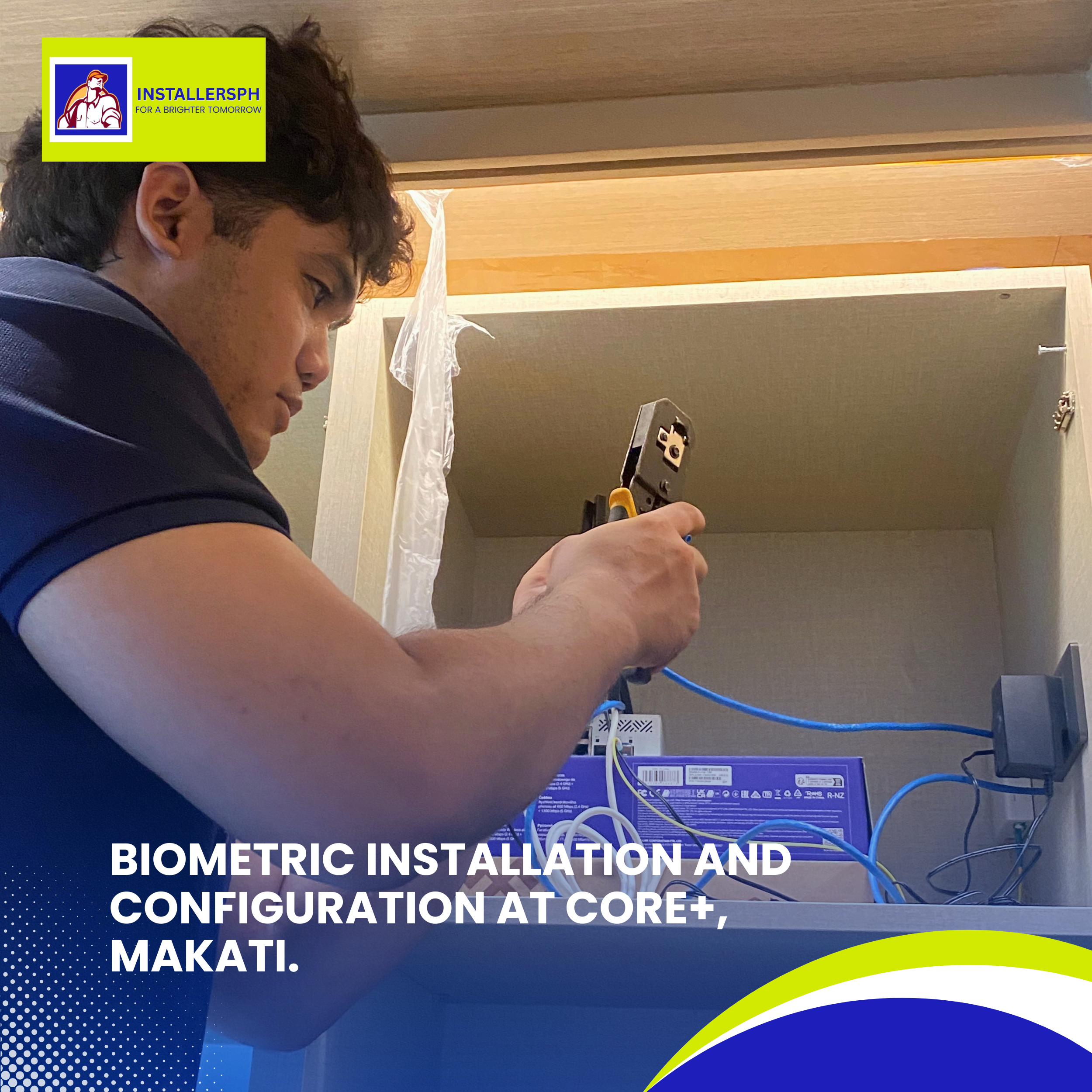
Biometric Installation and Configuration at Core+, Makati. October 12, 2026 Carol Jhane Canitan Video. https://youtube.com/shorts/MfDRZbSg_Bw Introduction. InstallersPH IT Solutions successfully completed a biometric system installation and configuration project for core+, located in …